


Imagine typing a query into a search bar or chatting with a virtual assistant. In moments, you get a precise, helpful answer. This has changed how we find information.
This interaction feels like magic. But it’s not magic. It’s the work of question answering systems and advanced technology.
The process uses complex algorithms, natural language processing, and machine learning. These technologies help analyse your query, search vast knowledge bases, and give a relevant answer.
But there are two key things. The first is the quality of the data it uses. The second is how you ask your question.
This article will dive into the technology that makes this possible. We’ll explore the engineering that creates the seamless illusion of understanding.
That topic also connects naturally to how ai answers questions the from another useful angle.
It also fits naturally to connect this with is a neural network considered where the topic is explored from another practical angle.
It also fits naturally to connect this with top questions about ai answered where the topic is explored from another practical angle.
The Seamless Illusion: From Question to Instant Answer
We’re used to getting quick answers from chatbots and virtual assistants. This has changed how we look for information. You ask a question or give a command, and seconds later, you get a clear, helpful answer. This makes it seem easy, hiding the hard work done by computers.
Getting answers used to be hard. You’d have to go to a library or search online for hours. Now, AI makes it easy to find what you need with just a question.
The smooth experience is thanks to tech like ChatGPT and Siri. They mix lots of knowledge and language skills to give quick answers. You see just the final answer, not the hard work behind it.
This tech is changing how we get information. It’s not just about finding facts. It can explain things, give summaries, and even come up with new ideas. As one expert says:
AI answer generators deliver instant and precise answers, revolutionising information retrieval.
This change is all about getting answers fast. But to really understand it, we need to see how it works. Let’s look at what happens when you ask a question and get an answer.
The Query’s Journey: A Step-by-Step Pipeline
An AI’s process to answer a query is a detailed pipeline. It turns your question into a clear, useful answer. This journey involves several steps, from raw input to structured data and then to understandable language.
This journey makes instant answers seem magical. Each step uses machine learning and special software. The whole process happens quickly, showing how advanced computer linguistics is today.
Stage 1: Reception and Pre-processing of the Input
When you ask a question, the AI starts working. It first cleans and standardises your input. This means removing extra spaces, fixing typos, and making all characters the same.
Then, it breaks your sentence into smaller parts called tokens. These can be words, parts of words, or even single characters. For example, “How does AI work?” becomes [“How”, “does”, “AI”, “work”, “?”].
This initial stage is key for all further analysis. It ensures the AI works with clear, consistent data. It’s a vital but often overlooked step.
Stage 2: Deep Linguistic Analysis and Comprehension
With tokens ready, the AI starts understanding. Natural language processing (NLP) is at the forefront here. It looks at the sentence’s structure and word relationships.
It tags parts of speech, like nouns and verbs. It also parses the sentence to find the main elements. The goal is to understand the meaning behind the words.
The AI also figures out what you want to know and what’s important in your question. For “What is the capital of France?”, it knows you want a fact and that “France” is the key entity. This deep understanding is key to getting the right information.
“The linguistic analysis phase is where the query transitions from being a sequence of symbols to a carrier of semantic intent. Without robust NLP, an AI is merely pattern-matching without true understanding.”
Stage 3: Information Retrieval and Synthesis
With the query’s intent clear, the AI searches for relevant information. It uses its knowledge base, built from vast amounts of text. For newer or more specific facts, it might use Retrieval-Augmented Generation (RAG) to search external databases.
The AI doesn’t just find one fact. It gathers many related pieces of information. It then combines this data, checking for consistency and relevance. This step is about collecting the raw materials for the answer.
The synthesis process ranks information by credibility and relevance. It deals with conflicting data, choosing the most reliable sources. This ensures the answer’s foundation is solid.
Stage 4: Response Generation and Formulation
The final stage brings the answer to life. Using Natural Language Generation (NLG), the AI creates a human-readable response. It turns the synthesised information into clear, grammatical text.
This isn’t just a simple lookup. The AI uses machine learning models to generate original text. It ensures the response directly answers your question and flows logically.
The system also formats the response, adding complete sentences or bullet points. It aims for a tone that’s helpful and fitting. The result is the polished answer you see on your screen.
| Pipeline Stage | Primary Task | Key Technologies Involved |
|---|---|---|
| Reception & Pre-processing | Text cleaning, normalisation, and tokenisation | Text normalisation libraries, tokenisers |
| Deep Linguistic Analysis | Parsing syntax, identifying intent and entities | Natural language processing (NLP) models, parsers |
| Information Retrieval & Synthesis | Fetching and combining relevant knowledge | Vector databases, search algorithms, RAG frameworks |
| Response Generation & Formulation | Producing coherent, natural language output | Natural Language Generation (NLG), transformer models |
This four-stage pipeline is the core of most AI question-answering systems. Each stage builds on the previous one, creating a smooth flow from question to answer. Advances in natural language processing and model design make each step faster and more accurate.
Understanding this journey shows that an AI’s answer is a complex process. It’s a blend of linguistics, computer science, and machine learning that powers today’s intelligent assistants.
Deconstructing the Query: How AI Understands Human Language
The magic of an AI’s instant reply starts with a key translation. It turns messy, unclear human text into data the machine can read. This is the critical part where the system must untangle grammar, slang, and implied meaning to understand what you really want.
From Characters to Concepts: The Role of Natural Language Processing (NLP)
Natural Language Processing, or NLP, is the bridge between human talk and machine logic. It’s a part of artificial intelligence that lets machines read, understand, and interpret human language. Without NLP, your question would be just a bunch of meaningless characters to the AI.
Tokenisation and Embeddings: Converting Words into Machine-Readable Vectors
The first step is tokenisation. Here, your sentence is broken down into smaller parts called tokens. These can be words, parts of words, or even single characters. For example, “unbelievable” might be split into “un”, “believe”, and “able”.
Then, these tokens are turned into numbers called embeddings. An embedding is a list of numbers that shows where a word is in a space. The power of embeddings is in how they capture meaning. Words with similar meanings, like “king” and “queen,” have numbers that are close together.
This number form lets the AI see connections and context. It knows “Paris” is related to “France” like “London” is to “England”. Modern transformer models use these detailed embeddings to deeply understand sentences.
Intent and Entity Recognition: Discerning What You Really Mean
Understanding is more than just words. The system must figure out your goal (intent) and the specific details (entities) in your question. This is where techniques like Part-of-Speech (POS) Tagging and Named Entity Recognition (NER) play a part.
POS tagging labels each word as a noun, verb, adjective, etc., helping the AI understand the sentence’s structure. NER finds and classifies important information into categories like names, organisations, dates, and locations.
Take the question: “Book a flight to London for next Monday.” The AI’s NLP pipeline would see the intent as “book_flight”. It would also find “London” as a location and “next Monday” as a date. This is key. The same word “python” could mean a programming language or a snake; context and entity recognition help the AI pick the right meaning.
| NLP Process | What It Does | Practical Example |
|---|---|---|
| Tokenisation | Breaks down text into smaller units (tokens) for analysis. | “ChatGPT” → [“Chat”, “G”, “PT”] |
| Word Embeddings | Converts tokens into numerical vectors that capture semantic meaning and relationships. | Vectors for “doctor” and “nurse” are closer than vectors for “doctor” and “pizza”. |
| Intent Recognition | Classifies the user’s overall goal or purpose from the query. | “What’s the weather?” → Intent: get_weather_forecast. |
| Entity Recognition (NER) | Identifies and categorises key information (names, dates, places) within the text. | “Meet Alex at Google HQ on 15th April” → [Person: Alex, Org: Google, Date: 15th April]. |
Together, these NLP techniques break down a question into a form the AI can work with. They clear up confusion and pull out clear signals from natural language. This detailed understanding, powered by advanced transformer models, is what makes modern AI different from old keyword-matching programs.
The Engine Room: Machine Learning Models that Power AI Responses
AI’s ability to answer questions relies on advanced machine learning models. These models are complex systems, often deep neural networks, that learn from vast data. They transform a query into a knowledgeable reply.
Earlier sections talked about how a query is processed and language analysed. This section looks at the AI models that do the hard work. Their design and training affect the quality and accuracy of AI answers.
Transformer Architectures: The Backbone of Modern Language AI
The transformer architecture changed natural language processing in 2017. It solved a big problem of earlier models, like RNNs, which struggled with long text.
The transformer’s attention mechanism is key. It’s like focusing on important words in a sentence. This lets the model understand the context better.
For example, in “What did the banker finance after selling his house?”, it links “his” to “banker”. This makes transformer models more accurate and efficient for big datasets.
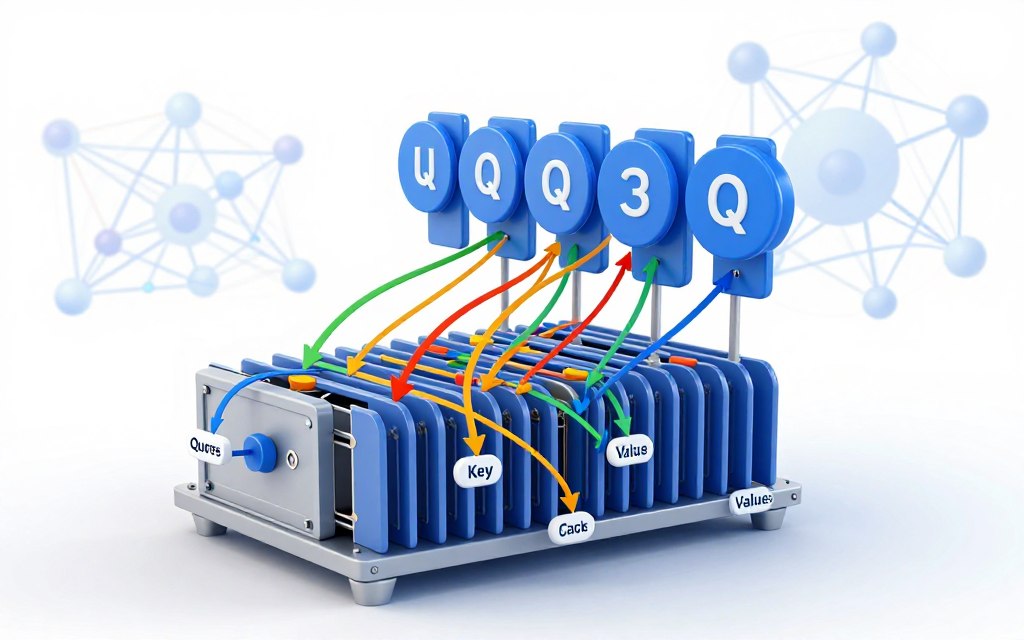
Now, most top language AI models use transformers. They form the base for models like BERT and GPT, used for different tasks.
From BERT to GPT: A Look at Specific Model Architectures
Though based on transformers, models like BERT and GPT are different. BERT is an encoder, while GPT is a decoder.
BERT, by Google, is great at understanding language. It’s trained to predict missing words in sentences. This makes it good at tasks like classification and search relevance.
Google uses BERT to understand search queries better. This improves search results.
GPT, by OpenAI, is a decoder. It predicts the next word in a sequence. This makes it good at generating text.
GPT-3 and its successors are used in chatbots and writing tools. They create coherent text from prompts.
The table below shows the main differences between BERT and GPT:
| Feature | BERT (Encoder) | GPT (Decoder) |
|---|---|---|
| Primary Architecture | Transformer Encoder | Transformer Decoder |
| Training Objective | Masked Language Modelling (Understanding) | Next-Token Prediction (Generation) |
| Key Strength | Text Classification, Search Ranking | Text Generation, Dialogue |
| Directionality | Bidirectional (Sees full context) | Unidirectional (Left-to-right) |
| Common Application | Google Search algorithm | ChatGPT, AI writing assistants |
Choosing between BERT and GPT depends on the task. BERT is good for extracting answers, while GPT is better for generating text. Modern systems often use both for the best results.
The Knowledge Base: Where AI Gets Its Information
Where does an AI get its facts? It uses a mix of pre-learned patterns and live info. Its knowledge isn’t in a database but in its neural network and from outside sources. This mix makes it seem both very knowledgeable and always up-to-date.
Training on Vast Corpora: The Pre-learning Phase
Before an AI can answer a question, it goes through a huge learning phase. It looks at huge amounts of text from books, journals, websites, and code. This teaches it about word relationships, common facts, and how humans reason.
The model doesn’t just memorise facts. It creates a deep understanding of language and knowledge. It learns that Paris is France’s capital, ‘hot’ is opposite to ‘cold’, and how to argue logically. This learning phase gives it a strong base.
As one expert said, “The model’s initial knowledge is a snapshot of the internet at the time of its training—powerful, but frozen in time.”
Retrieval-Augmented Generation (RAG): Accessing External Knowledge
To get beyond static data, advanced systems use retrieval-augmented generation (RAG). This method links the AI’s answers to specific, current, and reliable sources.
Here’s how RAG works:
- Query & Retrieve: When you ask a question, the system searches a connected knowledge base. This could be company documents, a live database, or reliable websites.
- Augment the Prompt: It then fetches the most relevant info and adds it to the prompt for the AI model.
- Generate Grounded Response: The model answers based on this context, not just its training. This makes answers more accurate and less likely to be made up.
This method is a game-changer for enterprise search. A legal firm’s AI can use the latest case law. A support chatbot can access the newest product manual. RAG ensures answers are based on approved content and reflect real-time data.
In short, while initial training data gives the AI language skills and general knowledge, retrieval-augmented generation is its dynamic reference library. This mix is essential for building trustworthy AI assistants, like those for enterprise search and customer service.
The Core Technology: How AI Answers Questions
AI’s ability to answer questions is based on two main principles. We’ve looked at the pipelines, models, and knowledge sources. Now, we dive into the engine that makes it all work. It’s not magic, but a complex system of learned probability.
Pattern Recognition and Statistical Prediction
At its core, AI models in question answering systems excel in pattern recognition and prediction. They don’t “know” facts like humans do. Instead, they’ve learned patterns from huge datasets during training.
These systems predict the next word in a sequence based on a user’s query and conversation history. They keep adding to the text, choosing the most likely next word based on patterns learned. This process continues until they’ve generated a coherent response.
AI’s answers aren’t pulled from a database. They’re generated step by step, guided by algorithms that understand word relationships. The quality of these answers depends on the depth of patterns learned from training data.
Ensuring Coherence and Contextual Relevance
Creating a coherent, on-topic response is a big challenge. Advanced transformer architectures use self-attention to weigh each word’s importance. This helps keep the response focused on the original question.
These models have a dynamic “context window” that considers relevant text to make predictions. They aim to stay on topic, even when discussing sub-points. This ensures the response remains coherent and relevant.
But, this system isn’t perfect. If training data is misleading or biased, the model might produce incorrect information. It can also “forget” earlier parts of the conversation if it’s too long. These limitations show that even top question answering systems have their limits.
Practical Applications and Domain-Specific Systems
AI is now in our daily lives, from search engines to smart speakers. It has moved from general models to systems made for specific areas. This change helps solve real problems, boosts productivity, and offers expert help where it’s needed most.
Enhancing Search Engines: Google’s Search Generative Experience
Web search has changed with AI. Now, search engines give direct answers instead of just links. Google’s Search Generative Experience (SGE) is a great example. It uses AI to mix information from different sources into a clear summary.
This change saves time for users. For hard questions, SGE breaks down topics, compares options, and suggests more questions. It shows the future of AI in making finding information easy and natural, changing how we access knowledge.
Powering Virtual Assistants: Amazon Alexa and Apple Siri
Virtual assistants like Amazon Alexa and Apple Siri are in our homes and pockets. They understand speech, natural language, and can do tasks. When you ask for the weather or to set a timer, they get what you mean, find the info, and do it.
These assistants are getting smarter. They’re moving from simple answers to handling more complex tasks and conversations. It’s key to know that chatbots are a type of AI, and virtual assistants are a more advanced version that responds to voice commands.
Aiding Specialists: AI in Healthcare Diagnostics and Legal Research
In fields like healthcare and law, AI is making a big difference. In healthcare, AI helps with diagnosis by comparing symptoms to medical data. It can also highlight important details in scans for doctors.
In law, AI quickly goes through case files and legal precedents. Lawyers ask complex questions, and AI finds relevant answers and summaries. These specialist tools are far from general chatbots. They need to be very accurate and reliable.
To see more examples, check out real-world AI applications in finance and customer service. The trend is clear: the best AI systems are those that really understand a specific field’s needs.
Navigating the Challenges and Current Limitations
AI models are advanced but face big challenges. These issues affect how reliable their outputs are. It’s important to know these problems to use AI wisely. The main issues are bias in AI, errors known as hallucinations, and technical limits.

Bias in Training Data and Output
AI learns from huge datasets made by humans. This means it can pick up and show biases in those data. For example, it might link certain jobs with a specific gender based on past data.
There are different types of bias:
- Representation bias: Some groups are not well-represented in the data.
- Historical bias: Past inequalities are kept alive in the data.
- Measurement bias: Bad data collection methods cause this.
This means AI can’t always be trusted. Its answers might support harmful views. So, we need to check its answers and make sure the data is diverse.
The Hallucination Problem: When AI Confidently States Falsehoods
AI hallucinations are a big problem. This is when AI makes up information that sounds real but is wrong. It’s hard to tell if what it says is true.
Hallucinations happen because AI guesses the next word without checking if it’s right. Bad questions can make it worse. It might make up facts, events, or sources, which is dangerous in many fields.
Context Window Limitations and Computational Cost
AI models can only process so much information at once. This is called the context window. It limits long conversations or documents.
Also, making and running big AI models costs a lot. It uses a lot of energy and money. This makes it hard to use the most advanced models and raises questions about their future.
| Challenge | Core Cause | Primary Impact |
|---|---|---|
| Bias in Outputs | Societal prejudices embedded in training data. | Generates unfair, stereotypical, or discriminatory content. |
| AI Hallucinations | Prioritising plausible language patterns over factual verification. | Spreads confident misinformation and erodes user trust. |
| Context & Compute Limits | Hardware constraints and model architecture design. | Restricts use cases and creates high barriers to entry and operation. |
Knowing these limits doesn’t mean we should give up on AI. It’s about using it carefully and understanding its limits. We need to ask the right questions, check the answers, and know what AI can and can’t do. For more on dealing with AI challenges, research is ongoing to fix these issues.
The Future of AI-Driven Question Answering
Artificial intelligence is evolving, making question-answering technology better. It will be more truthful and offer richer interactions. Current systems are just the start. The next step is to create AI that is more reliable and fits into our daily lives.
Towards More Robust and Truthful Systems
Researchers are working hard to make AI more accurate. They want systems that can check their own answers. This means going beyond simple Retrieval-Augmented Generation (RAG).
New systems have special modules for reasoning and checking facts. They compare their answers to trusted sources. This leads to AI that can make decisions like an expert, showing where it got its information.
This push for truth is key for working with AI in healthcare and law. Professionals need tools that give them reliable, checkable information. Reducing bias in AI is also a big challenge, tackled through better data curation and fairness algorithms.
Multimodal Integration: Beyond Text to Voice and Vision
The future of AI isn’t just about typing. Multimodal AI lets systems understand and respond in many ways. You could ask a question by showing a photo, speaking, or sharing a video.
Models like Google’s Gemini are leading the way. They can look at images, listen to speech, and write clear answers. This means AI can respond in a way that feels personal, based on how you speak, what you show, or your past interactions.
This integration makes interfaces more natural and efficient. It also lets AI understand context better. For example, an AI could diagnose a car problem from a video or explain a graph in a research paper.
These trends point to a future where humans and machines work together more smoothly. The focus will shift from just getting answers to solving problems together. AI will see the world in a richer way and be more trustworthy.
| Key Trend | Core Description | Potential Impact |
|---|---|---|
| Robust Verification | AI systems with built-in fact-checking and source citation mechanisms to minimise hallucinations. | Increased trust and adoption in high-stakes domains like academia, journalism, and medicine. |
| Multimodal Integration | Models that process and combine text, images, audio, and video for input and output. | More intuitive, accessible interfaces and AI that can interpret real-world, visual scenarios. |
| Personalised Collaboration | Systems that adapt their communication style and content depth based on individual user needs and context. | Transformation of customer service, education, and personal assistant technology. |
| Advanced Contextual Reasoning | Ability to maintain and utilise long, complex context for nuanced, multi-turn conversations. | Effective AI partners for complex projects, strategic planning, and creative endeavours. |
The future of AI in answering questions is about creating adaptable, truthful, and multi-sensory partners. These systems will go from being reactive tools to proactive collaborators. They will change how we access, validate, and interact with knowledge.
Conclusion
The way AI answers questions is truly amazing. It turns a simple question into a detailed answer. This is thanks to natural language processing, transformer models, and the ability to find information quickly.
Question answering systems are getting better fast. They help with things like Google’s Search Generative Experience and aid in legal and medical fields. These systems make it easier to make decisions and handle complex tasks.
But, there are challenges like bias and making things up. These issues drive the need for better AI. The future looks bright with systems that can understand voice and visual data.
Understanding how AI answers questions is key. It helps us use this technology wisely. As AI improves, it will change how we access and use information.
FAQ
How does an AI system like ChatGPT or Google Bard understand my question?
AI uses Natural Language Processing (NLP) to get your question. It breaks down the text into tokens and turns them into numbers to understand the meaning. Then, it figures out what you want and what’s important, like dates or names.
What is the ‘transformer architecture’ and why is it important for AI answers?
The transformer architecture is a new way of building AI models. It uses an attention mechanism to focus on the right words in a sentence. This helps the model understand the context and give better answers.
Where does an AI get the information to answer my questions?
AI gets its knowledge from two main places. First, it learns from a huge amount of text data. Second, it uses Retrieval-Augmented Generation (RAG) to find new information from the web or databases.
What does it mean when an AI ‘hallucinates’ an answer?
When an AI hallucinates, it makes up information that sounds right but isn’t true. This happens because it’s trained on patterns, not facts. New methods like RAG are being developed to fix this problem.
What is the difference between models like BERT and GPT?
A: BERT is great at understanding language, making it good for tasks like search and sentiment analysis. GPT models are better at creating text, like chatbots. They both use transformers but for different tasks.
How do virtual assistants like Amazon Alexa or Apple Siri use this technology?
Assistants like Amazon Alexa and Apple Siri use NLP to understand you. They then find the right information and give you an answer. They can also do tasks like setting timers or playing music.
What is a ‘context window’ and why is it a limitation?
The context window is how much text an AI can look at at once. If there’s too much, it forgets the start. Making this bigger is hard because it needs a lot of memory and power.
What is Retrieval-Augmented Generation (RAG) and how does it help?
A: Retrieval-Augmented Generation (RAG) helps AI by finding the right information from the web or databases. This makes its answers more accurate and up-to-date.
How is AI question-answering being used in specialised fields like healthcare?
In healthcare, AI is trained on medical data to help doctors. It can look up symptoms and suggest possible conditions. In law, it helps find important legal documents. These systems are very useful for professionals.
What does the future hold for AI-driven question answering?
The future of AI is looking bright. We’ll see more accurate and reliable systems. They’ll understand and respond to different types of media, like images and videos. We can also expect more personalisation and collaboration with humans.


 By
By